
Choosing a baby name with a royal meaning can give it a sense of strength, dignity, leadership, and history.
If you are searching for names that mean royal for boys, you will find more than names that literally translate to “royal.”
Some names mean king, ruler, prince, noble, crown, or kingly, while others are connected to historic rulers and royal titles.
This guide brings those meanings together so you can choose a name based on the feeling you want.
You will find familiar choices such as Rex, Royal, Ryan, Amir, Prince, Eric, Richard, and Stephen, along with uncommon names from Irish, Persian, Arabic, Turkish, Yoruba, Sanskrit, Old English, and other naming traditions.
One important note: name meanings can vary by language, spelling, and historical source.
For example, Ryan is traditionally explained as “little king,” but its deeper etymology is considered uncertain. Likewise, Roy is often associated with the French word roi (“king”), but the given name Roy also has a separate Scottish origin connected with Ruadh.
Boy Names That Literally Mean Royal or Kingly
If you want the closest match to the keyword, start here. These names have direct connections to royal, kingly, kingship, or royal status rather than simply sounding regal. Some are familiar in English-speaking countries, while others offer a distinctive international feel.
Royal — English; literally comes from the word “royal,” ultimately connected to Latin rex, meaning “king.” It is one of the most direct choices.
Rex — Latin; means “king.” Short, bold, and unmistakably regal.
Basil — Greek; means “royal” or “kingly,” from basileus, meaning “king.”
Ríoghán — Irish; connected with rí, meaning “king,” or ríg, meaning “royal.”
Regulus — Ancient Roman; means “prince” or “little king,” from Latin rex. It is also the name of a bright star in Leo.
Shahrokh — Persian; means “royal face,” combining shah, “king,” with rokh, “face.”
Royal — English; a modern word-name with a clear connection to kingship and majesty.
Brendan — Irish; derived from an older form connected with a Welsh element meaning “king, prince.”
Prince — English; taken directly from the royal title, ultimately from Latin princeps.
Shahzad — Persian/Urdu; means “prince, son of the king.”
Shahzade — Persian; associated with a prince or royal son.
Amir — Arabic; means “commander” or “prince” and was originally a title.
Mirza — Persian; means “prince” and historically referred to royal or noble descendants.
Nkosana — Xhosa; means “prince.”
Putera — Malay; means “son” or “prince.”
Aodren — Breton; associated with “royal” or “lineage of a king.”
Andriantsoa — Malagasy; built from andrian, meaning “king, royal,” and soa, meaning “good.”
Andriantafika — Malagasy; incorporates andrian, meaning “king, royal,” with tafika, meaning “army.”
Cynebald — Anglo-Saxon; combines an element meaning “royal” with one meaning “bold” or “brave.”
Cyneberht — Anglo-Saxon; combines “royal” with “bright.”
These choices work especially well if the meaning itself matters more to you than popularity. For a modern American family, Royal, Rex, Amir, Prince, and Basil are easier to recognize. For parents who want something rare, Ríoghán, Cyneberht, Aodren, and Andriantsoa offer a more unusual path.
Boy Names That Mean King, Little King, or Son of a King
Some of the strongest royal baby names do not use the exact word “royal.” Instead, they connect directly to king, little king, ruler of kings, or a king’s son. These names can carry a powerful meaning while still feeling like everyday first names.
Ryan — Irish/English; traditionally interpreted as “little king,” although the underlying name Rian has an uncertain deeper etymology.
Rian — Irish; associated with the traditional “little king” interpretation.
Rex — Latin; “king,” making it one of the clearest short royal names.
Rey — Spanish; means “king” and is also used as a short form of Reynaldo.
Ríoghán — Irish; derived from an element connected with “king” or “royal.”
Malik — Arabic; means “king” or “owner,” depending on usage and context.
Abd al-Malik — Arabic; means “servant of the King.”
Abimelech — Biblical Hebrew; means “my father is king.”
Raj — Sanskrit/Indian usage; connected with rule, kingship, and royal authority.
Raja — Sanskrit; means “king” or “ruler.”
Rajesh — Sanskrit; means “ruler of kings,” from raja (“king”) and isha (“lord, ruler”).
Shahzad — Persian; “prince, son of the king.”
Shahjahan — Persian; means “king of the world.”
Regulus — Latin; “prince” or “little king.”
Ruarc — Irish; historically borne by a king of Leinster, giving the name a strong royal association.
King — English; directly taken from the title and ultimately derived from Old English cyning.
Basil — Greek; “royal, kingly.”
Brendan — Irish; associated with an Old Welsh element meaning “king, prince.”
Prince — English; a direct royal title used as a given name.
Sultan — Arabic and several other languages; means “ruler, king, sultan.”
Kağan — Turkish; a title meaning “king” or “ruler,” traditionally associated with the title Khan.
This group is ideal if you want the name to communicate leadership from the first introduction. Ryan and Rey feel subtle. Rex and King are direct. Rajesh and Shahjahan are more culturally specific and carry a stronger historical flavor.
Powerful Boy Names That Mean Ruler or Leader
“Royal” does not always mean wearing a crown. In many naming traditions, royalty is expressed through the idea of ruling, leading, commanding, or having authority. These names are useful if you want a regal meaning without choosing a name that sounds like a title.
Eric — Old Norse; means “ever ruler” and was borne by several Scandinavian kings.
Richard — Germanic; means “brave ruler.” It was also the name of several English kings.
Donald — Scottish Gaelic; means “ruler of the world” and was borne by early Scottish and Pictish kings.
Roderick — Germanic; means “famous ruler.”
Theodoric — Gothic; means “ruler of the people.”
Edric — Old English; combines elements meaning “wealth” and “ruler/king.”
Ælfric — Anglo-Saxon; combines “elf” with “ruler/king.”
Æðelric — Anglo-Saxon; combines “noble” with “ruler/king.”
Alaric — Germanic; traditionally connected with the idea of an all-ruler or ruler of all.
Harold — Germanic; associated with an army ruler or military leader.
Reynold — Germanic; built from elements associated with counsel and power or authority.
Hakan — Turkish; means “emperor” or “ruler.”
Kağan — Turkish; “king, ruler.”
Sultan — Arabic; “ruler, king.”
Emirhan — Turkish; combines emir, “amir/prince,” with han, “khan/ruler.”
Orhan — Turkish; combines the name element with han, “khan/ruler.” It was also the name of an Ottoman sultan.
Metehan — Turkish; combines Mete with han, referring to a historic Xiongnu ruler.
Gökhan — Turkish; combines gök, “sky,” with han, “leader.”
Batuhan — Turkish; combines Batu with han, “ruler/leader.”
Theoderich — Old German; the older Germanic form of Theodoric, carrying the same ruler-of-the-people sense.
If you want a name that sounds strong but not overly royal, Eric, Richard, Donald, Roderick, and Harold are useful choices. For a more distinctive international style, Hakan, Kağan, Orhan, and Emirhan stand out.
Noble and High-Born Boy Names With a Royal Feel
Not every royal family name means “king.” Royal traditions are also tied to ideas such as nobility, high birth, honor, eminence, and distinguished character. These names can give your son a refined meaning without making the royal connection too obvious.
Arya — Persian/Indian; from an Indo-Iranian root associated with “noble.”
Aryan — Hindi; a variant connected with Arya and the meaning “noble.”
Asil — Turkish; means “noble,” ultimately from Arabic.
Behzad — Persian; means “noble, high-born.”
Karim — Arabic/Persian; means “generous, noble.”
Sharif — Arabic, Urdu, Persian, and other languages; means “noble, eminent.” It was also historically used as a title.
Adalbern — Germanic; combines “noble” with “bear.”
Adalhard — Germanic; combines “noble” with an element meaning firm, brave, or hardy.
Adalwin — Germanic; combines “noble” with “friend.”
Adelmar — Germanic; combines “noble” with “famous.”
Albert — Germanic; means “noble and bright.” The name also has historic connections to European royalty.
Edmund — Old English; historically associated with royal and noble figures.
Edgar — Old English; a historic English king bore the name Edgar the Peaceful.
Frederick — Germanic; traditionally connected with peaceful rule and has a long history among European royalty.
Henry — Germanic; associated with household or estate rule and famously used by many European monarchs.
William — Germanic; historically used by numerous kings and nobles across Europe.
Charles — Germanic; a classic European royal name with centuries of royal use.
Arthur — Welsh/Brittonic tradition; strongly connected with the legendary King Arthur.
Louis — Germanic/French; a traditional royal name used by many French kings.
George — Greek; not literally “royal,” but strongly associated with British and European royalty.
This category is especially useful if you want royal character without a literal royal definition. A name such as Albert, Henry, Arthur, Charles, or Louis can feel traditional and distinguished while still working naturally in everyday life.
Boy Names Connected to Princes, Royal Sons, and Noble Titles
If “royal” makes you think of a prince rather than a king, this group offers some of the clearest choices. These names come from languages where words for prince, commander, royal son, or noble title became personal names.
Amir — Arabic; “commander, prince.”
Al-Amir — Arabic; “the commander, the prince.”
Mirza — Persian; “prince,” historically connected with royal offspring.
Shahzad — Persian/Urdu; “prince, son of the king.”
Shahzaib — Persian/Urdu; commonly associated with royal or kingly imagery in modern naming use.
Nkosana — Xhosa; “prince.”
Putera — Malay; “son, prince.”
Prince — English; directly taken from the royal title.
Regulus — Latin; “prince, little king.”
Akihiko — Japanese; can be formed with hiko, meaning “boy, prince.”
Takehiko — Japanese; includes hiko, an element meaning “boy, prince.”
Amirkhan — Arabic/Turkic; combines “commander/prince” with “khan,” a leader or ruler.
Emirhan — Turkish; combines emir and han, creating a strong leadership meaning.
Ämirxan — Tatar; a regional form of Amirkhan.
Mirlan — Kyrgyz; may incorporate the Arabic amir element associated with commander.
Mirbek — Kyrgyz; may combine amir with beg, a historic title associated with a chieftain or master.
Sultan — Arabic and related languages; a royal title meaning ruler or king.
Shah — Persian; literally “king” and historically used as a royal title.
Raja — Sanskrit; “king” or “ruler.”
Malik — Arabic; “king” or “owner,” giving it a strong royal association.
For families with cultural ties to South Asia, the Middle East, Central Asia, Southeast Asia, or Africa, these names can offer a royal meaning that also reflects a specific linguistic tradition. It is worth checking pronunciation and cultural context before choosing an uncommon international name.
Rare and Uncommon Royal Boy Names for a Distinctive Choice
If common names such as Ryan, Henry, or William feel too familiar, a rare royal name can give your son something more distinctive. The names below range from ancient and historical choices to names with older linguistic roots.
Cyneheard — Anglo-Saxon; combines “royal” with “hard, firm, brave.”
Cynemær — Anglo-Saxon; combines “royal” with “famous.”
Cyneric — Anglo-Saxon; combines “royal” with “ruler/king.”
Cynesige — Anglo-Saxon; combines “royal” with “victory.”
Cyneweard — Anglo-Saxon; combines “royal” with “guard.”
Cynefrið — Anglo-Saxon; means “royal peace.”
Alberich — Germanic; means “elf ruler” or “elf king.”
Ælfric — Anglo-Saxon; “elf ruler/king.”
Æðelric — Anglo-Saxon; “noble ruler/king.”
Alfríkr — Old Norse; combines “elf” with “ruler/king.”
Ragnvaldr — Old Norse; combines counsel with “ruler.”
Ásvaldr — Old Norse; combines “god” with “ruler.”
Hrǿríkr — Old Norse; combines fame/glory with “ruler/king.”
Theodoric — Gothic; “ruler of the people.”
Xerxes — Old Persian; means “ruler over heroes.”
Suresha — Sanskrit/Hindu usage; means “ruler of the gods.”
Naresh — Sanskrit; means “lord of men” or “ruler.”
Rajesh — Sanskrit; “ruler of kings.”
Hakan — Turkish; “emperor, ruler.”
Shahrokh — Persian; “royal face.”
These names are better suited to parents who enjoy history, mythology, international naming traditions, or uncommon names. A rare name can be memorable, but check its spelling, pronunciation, and how it works with your surname before making a final choice.
How to Choose the Right Royal Name for Your Baby Boy
A meaningful name is only one part of the decision. The best choice should also feel natural for your family and your child’s everyday life.
Start with the exact meaning
Decide what “royal” means to you.
Do you want:
- King: Rex, Rey, King, Raja
- Little king: Ryan, Rian, Regulus
- Prince: Amir, Mirza, Prince, Nkosana
- Ruler: Eric, Richard, Roderick, Hakan
- Royal: Royal, Basil, Ríoghán
- Noble: Arya, Asil, Behzad, Sharif
- Crown: Stephen and Yoruba names beginning with Ade
This makes the search much easier.
Consider pronunciation
A beautiful name can become frustrating if people constantly struggle to say it. If your family lives in the United States, test the name with friends or relatives who have never seen it before.
Ask them:
“How would you pronounce this?”
Their answer can tell you whether the spelling needs a simpler variant.
Check the cultural origin
A royal name often carries history with it. Amir, Shahzad, Rajesh, Kağan, Cyneberht, and Ríoghán come from very different traditions.
Learn the original meaning and cultural background rather than relying only on a modern baby-name website. This is especially important when a name has several possible meanings.
Say the complete name aloud
Say the first, middle, and last name together.
Try:
First name + middle name + surname
Then say it quickly, as if introducing your child at school or at an event. Check the initials, rhythm, and possible nicknames.
Think beyond the baby years
A name that sounds adorable for a newborn should also work for a teenager and an adult.
Rex, Eric, Richard, Amir, and Henry can move easily from childhood into adulthood. Very unusual historical names may need more explanation, which is not necessarily bad, but it is worth considering.
Avoid choosing only because a website says “royal”
Name meanings are not always simple translations. Some websites group names together because they relate to royalty, rulers, nobility, or famous historical figures. Those are not necessarily the same as a literal meaning of “royal.”
For example, Roy is often associated with French roi, but the established Scottish/English given name Roy also comes from a different root connected with Ruadh.
That is why checking the linguistic history can give you a more accurate result than copying a large list.
Common Questions About Names That Mean Royal for Boys
What boy name literally means royal?
Royal is one of the clearest boy names with a literal royal meaning. It comes from the English word “royal,” which ultimately traces back through Old French to Latin regalis, related to rex, meaning “king.” Basil is another direct option because it means “royal” or “kingly” in Greek.
What boy name means king?
Several names connect directly with “king.” Rex means “king” in Latin, while Rey means “king” in Spanish. King itself is also used as an English given name. Raja and Malik are additional choices associated with kingship or royal authority in their respective languages.
What boy name means little king?
Ryan is traditionally said to mean “little king,” based on Irish rí, meaning “king,” combined with a diminutive element. However, the deeper etymology of Rian is uncertain, so “little king” is best described as a traditional interpretation rather than an unquestionable literal translation.
What boy name means prince?
Amir means “commander” or “prince” in Arabic and was originally a title. Mirza means “prince” in Persian, while Nkosana means “prince” in Xhosa. Prince itself is also used as an English masculine given name.
What boy name means ruler?
Eric means “ever ruler,” Richard means “brave ruler,” and Roderick means “famous ruler.” Hakan means “emperor, ruler” in Turkish, while Theodoric means “ruler of the people.” These choices give you a royal idea without requiring a name that literally means king.
What boy name means noble or high-born?
Behzad means “noble, high-born” in Persian. Asil means “noble” in Turkish, while Sharif means “noble, eminent” in Arabic and has also been used as a title. Albert means “noble and bright,” giving it a traditional European feel.
Is Royal a good boy name?
Royal is a direct word-name with an unmistakable connection to kingship and majesty. It has been used as a given name since the 19th century and is listed as masculine and feminine. Parents who like modern word names may appreciate its clarity, while families wanting a traditional name may prefer Rex, Henry, Arthur, or William.
What is a unique royal name for a boy?
For something unusual, consider Cyneberht, Cyneric, Ríoghán, Theodoric, Xerxes, Shahrokh, Kağan, or Andriantsoa. These names come from different linguistic traditions and connect with royalty, kingship, rulers, or noble status. Before choosing one, verify pronunciation and cultural context because some are much less familiar in modern English-speaking communities.
What names mean crown for boys?
Stephen is a well-known masculine name connected with “crown” or “wreath.” Yoruba names such as Ade, Adebayo, Adebola, Adebowale, and Adeyemi also contain ade, meaning “crown.” These can be excellent choices when you want a royal image based on the crown rather than the word king.
Final Thoughts
Finding names that mean royal for boys does not have to mean choosing an obvious title such as King or Prince. Choosing a baby name with a royal meaning can give it a sense of strength, dignity, leadership, and history. If you are searching for names that mean royal for boys, you will find more than names that literally translate to “royal.” Some names mean king, ruler, prince, noble, crown, or kingly, while others are connected to historic rulers and royal titles.
This guide brings those meanings together so you can choose a name based on the feeling you want. You will find familiar choices such as Rex, Royal, Ryan, Amir, Prince, Eric, Richard, and Stephen, along with uncommon names from Irish, Persian, Arabic, Turkish, Yoruba, Sanskrit, Old English, and other naming traditions.
One important note: name meanings can vary by language, spelling, and historical source. For example, Ryan is traditionally explained as “little king,” but its deeper etymology is considered uncertain. Likewise, Roy is often associated with the French word roi (“king”), but the given name Roy also has a separate Scottish origin connected with Ruadh.
Boy Names That Literally Mean Royal or Kingly
If you want the closest match to the keyword, start here. These names have direct connections to royal, kingly, kingship, or royal status rather than simply sounding regal. Some are familiar in English-speaking countries, while others offer a distinctive international feel.
Royal — English; literally comes from the word “royal,” ultimately connected to Latin rex, meaning “king.” It is one of the most direct choices.
Rex — Latin; means “king.” Short, bold, and unmistakably regal.
Basil — Greek; means “royal” or “kingly,” from basileus, meaning “king.”
Ríoghán — Irish; connected with rí, meaning “king,” or ríg, meaning “royal.”
Regulus — Ancient Roman; means “prince” or “little king,” from Latin rex. It is also the name of a bright star in Leo.
Shahrokh — Persian; means “royal face,” combining shah, “king,” with rokh, “face.”
Royal — English; a modern word-name with a clear connection to kingship and majesty.
Brendan — Irish; derived from an older form connected with a Welsh element meaning “king, prince.”
Prince — English; taken directly from the royal title, ultimately from Latin princeps.
Shahzad — Persian/Urdu; means “prince, son of the king.”
Shahzade — Persian; associated with a prince or royal son.
Amir — Arabic; means “commander” or “prince” and was originally a title.
Mirza — Persian; means “prince” and historically referred to royal or noble descendants.
Nkosana — Xhosa; means “prince.”
Putera — Malay; means “son” or “prince.”
Aodren — Breton; associated with “royal” or “lineage of a king.”
Andriantsoa — Malagasy; built from andrian, meaning “king, royal,” and soa, meaning “good.”
Andriantafika — Malagasy; incorporates andrian, meaning “king, royal,” with tafika, meaning “army.”
Cynebald — Anglo-Saxon; combines an element meaning “royal” with one meaning “bold” or “brave.”
Cyneberht — Anglo-Saxon; combines “royal” with “bright.”
These choices work especially well if the meaning itself matters more to you than popularity. For a modern American family, Royal, Rex, Amir, Prince, and Basil are easier to recognize. For parents who want something rare, Ríoghán, Cyneberht, Aodren, and Andriantsoa offer a more unusual path.
Boy Names That Mean King, Little King, or Son of a King
Some of the strongest royal baby names do not use the exact word “royal.” Instead, they connect directly to king, little king, ruler of kings, or a king’s son. These names can carry a powerful meaning while still feeling like everyday first names.
Ryan — Irish/English; traditionally interpreted as “little king,” although the underlying name Rian has an uncertain deeper etymology.
Rian — Irish; associated with the traditional “little king” interpretation.
Rex — Latin; “king,” making it one of the clearest short royal names.
Rey — Spanish; means “king” and is also used as a short form of Reynaldo.
Ríoghán — Irish; derived from an element connected with “king” or “royal.”
Malik — Arabic; means “king” or “owner,” depending on usage and context.
Abd al-Malik — Arabic; means “servant of the King.”
Abimelech — Biblical Hebrew; means “my father is king.”
Raj — Sanskrit/Indian usage; connected with rule, kingship, and royal authority.
Raja — Sanskrit; means “king” or “ruler.”
Rajesh — Sanskrit; means “ruler of kings,” from raja (“king”) and isha (“lord, ruler”).
Shahzad — Persian; “prince, son of the king.”
Shahjahan — Persian; means “king of the world.”
Regulus — Latin; “prince” or “little king.”
Ruarc — Irish; historically borne by a king of Leinster, giving the name a strong royal association.
King — English; directly taken from the title and ultimately derived from Old English cyning.
Basil — Greek; “royal, kingly.”
Brendan — Irish; associated with an Old Welsh element meaning “king, prince.”
Prince — English; a direct royal title used as a given name.
Sultan — Arabic and several other languages; means “ruler, king, sultan.”
Kağan — Turkish; a title meaning “king” or “ruler,” traditionally associated with the title Khan.
This group is ideal if you want the name to communicate leadership from the first introduction. Ryan and Rey feel subtle. Rex and King are direct. Rajesh and Shahjahan are more culturally specific and carry a stronger historical flavor.
Powerful Boy Names That Mean Ruler or Leader
“Royal” does not always mean wearing a crown. In many naming traditions, royalty is expressed through the idea of ruling, leading, commanding, or having authority. These names are useful if you want a regal meaning without choosing a name that sounds like a title.
Eric — Old Norse; means “ever ruler” and was borne by several Scandinavian kings.
Richard — Germanic; means “brave ruler.” It was also the name of several English kings.
Donald — Scottish Gaelic; means “ruler of the world” and was borne by early Scottish and Pictish kings.
Roderick — Germanic; means “famous ruler.”
Theodoric — Gothic; means “ruler of the people.”
Edric — Old English; combines elements meaning “wealth” and “ruler/king.”
Ælfric — Anglo-Saxon; combines “elf” with “ruler/king.”
Æðelric — Anglo-Saxon; combines “noble” with “ruler/king.”
Alaric — Germanic; traditionally connected with the idea of an all-ruler or ruler of all.
Harold — Germanic; associated with an army ruler or military leader.
Reynold — Germanic; built from elements associated with counsel and power or authority.
Hakan — Turkish; means “emperor” or “ruler.”
Kağan — Turkish; “king, ruler.”
Sultan — Arabic; “ruler, king.”
Emirhan — Turkish; combines emir, “amir/prince,” with han, “khan/ruler.”
Orhan — Turkish; combines the name element with han, “khan/ruler.” It was also the name of an Ottoman sultan.
Metehan — Turkish; combines Mete with han, referring to a historic Xiongnu ruler.
Gökhan — Turkish; combines gök, “sky,” with han, “leader.”
Batuhan — Turkish; combines Batu with han, “ruler/leader.”
Theoderich — Old German; the older Germanic form of Theodoric, carrying the same ruler-of-the-people sense.
If you want a name that sounds strong but not overly royal, Eric, Richard, Donald, Roderick, and Harold are useful choices. For a more distinctive international style, Hakan, Kağan, Orhan, and Emirhan stand out.
Noble and High-Born Boy Names With a Royal Feel
Not every royal family name means “king.” Royal traditions are also tied to ideas such as nobility, high birth, honor, eminence, and distinguished character. These names can give your son a refined meaning without making the royal connection too obvious.
Arya — Persian/Indian; from an Indo-Iranian root associated with “noble.”
Aryan — Hindi; a variant connected with Arya and the meaning “noble.”
Asil — Turkish; means “noble,” ultimately from Arabic.
Behzad — Persian; means “noble, high-born.”
Karim — Arabic/Persian; means “generous, noble.”
Sharif — Arabic, Urdu, Persian, and other languages; means “noble, eminent.” It was also historically used as a title.
Adalbern — Germanic; combines “noble” with “bear.”
Adalhard — Germanic; combines “noble” with an element meaning firm, brave, or hardy.
Adalwin — Germanic; combines “noble” with “friend.”
Adelmar — Germanic; combines “noble” with “famous.”
Albert — Germanic; means “noble and bright.” The name also has historic connections to European royalty.
Edmund — Old English; historically associated with royal and noble figures.
Edgar — Old English; a historic English king bore the name Edgar the Peaceful.
Frederick — Germanic; traditionally connected with peaceful rule and has a long history among European royalty.
Henry — Germanic; associated with household or estate rule and famously used by many European monarchs.
William — Germanic; historically used by numerous kings and nobles across Europe.
Charles — Germanic; a classic European royal name with centuries of royal use.
Arthur — Welsh/Brittonic tradition; strongly connected with the legendary King Arthur.
Louis — Germanic/French; a traditional royal name used by many French kings.
George — Greek; not literally “royal,” but strongly associated with British and European royalty.
This category is especially useful if you want royal character without a literal royal definition. A name such as Albert, Henry, Arthur, Charles, or Louis can feel traditional and distinguished while still working naturally in everyday life.
Boy Names Connected to Princes

If “royal” makes you think of a prince rather than a king, this group offers some of the clearest choices. These names come from languages where words for prince, commander, royal son, or noble title became personal names.
Amir — Arabic; “commander, prince.”
Al-Amir — Arabic; “the commander, the prince.”
Mirza — Persian; “prince,” historically connected with royal offspring.
Shahzad — Persian/Urdu; “prince, son of the king.”
Shahzaib — Persian/Urdu; commonly associated with royal or kingly imagery in modern naming use.
Nkosana — Xhosa; “prince.”
Putera — Malay; “son, prince.”
Prince — English; directly taken from the royal title.
Regulus — Latin; “prince, little king.”
Akihiko — Japanese; can be formed with hiko, meaning “boy, prince.”
Takehiko — Japanese; includes hiko, an element meaning “boy, prince.”
Amirkhan — Arabic/Turkic; combines “commander/prince” with “khan,” a leader or ruler.
Emirhan — Turkish; combines emir and han, creating a strong leadership meaning.
Ämirxan — Tatar; a regional form of Amirkhan.
Mirlan — Kyrgyz; may incorporate the Arabic amir element associated with commander.
Mirbek — Kyrgyz; may combine amir with beg, a historic title associated with a chieftain or master.
Sultan — Arabic and related languages; a royal title meaning ruler or king.
Shah — Persian; literally “king” and historically used as a royal title.
Raja — Sanskrit; “king” or “ruler.”
Malik — Arabic; “king” or “owner,” giving it a strong royal association.
For families with cultural ties to South Asia, the Middle East, Central Asia, Southeast Asia, or Africa, these names can offer a royal meaning that also reflects a specific linguistic tradition. It is worth checking pronunciation and cultural context before choosing an uncommon international name.
Rare Royal Boy Names
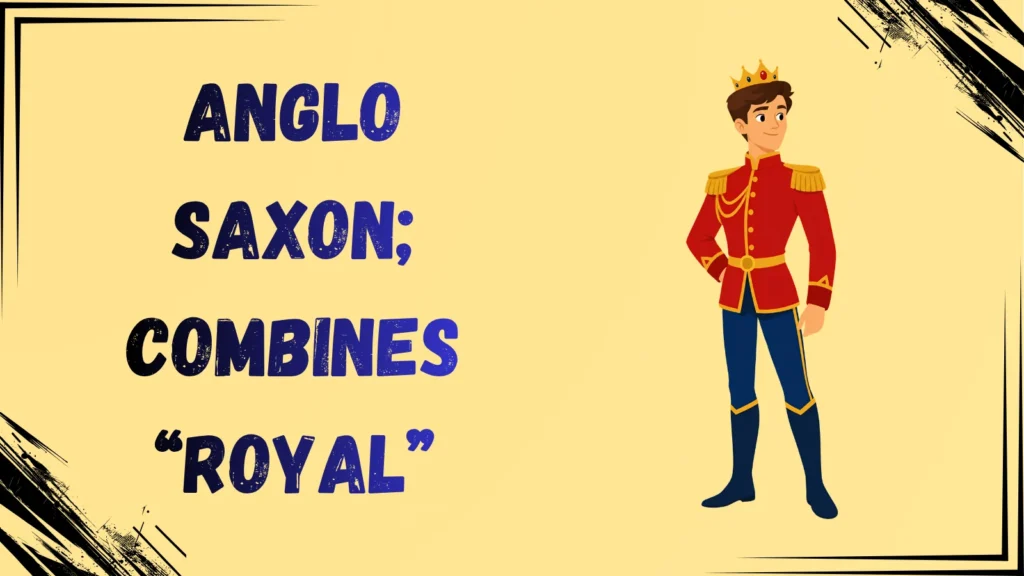
If common names such as Ryan, Henry, or William feel too familiar, a rare royal name can give your son something more distinctive. The names below range from ancient and historical choices to names with older linguistic roots.
Cyneheard — Anglo-Saxon; combines “royal” with “hard, firm, brave.”
Cynemær — Anglo-Saxon; combines “royal” with “famous.”
Cyneric — Anglo-Saxon; combines “royal” with “ruler/king.”
Cynesige — Anglo-Saxon; combines “royal” with “victory.”
Cyneweard — Anglo-Saxon; combines “royal” with “guard.”
Cynefrið — Anglo-Saxon; means “royal peace.”
Alberich — Germanic; means “elf ruler” or “elf king.”
Ælfric — Anglo-Saxon; “elf ruler/king.”
Æðelric — Anglo-Saxon; “noble ruler/king.”
Alfríkr — Old Norse; combines “elf” with “ruler/king.”
Ragnvaldr — Old Norse; combines counsel with “ruler.”
Ásvaldr — Old Norse; combines “god” with “ruler.”
Hrǿríkr — Old Norse; combines fame/glory with “ruler/king.”
Theodoric — Gothic; “ruler of the people.”
Xerxes — Old Persian; means “ruler over heroes.”
Suresha — Sanskrit/Hindu usage; means “ruler of the gods.”
Naresh — Sanskrit; means “lord of men” or “ruler.”
Rajesh — Sanskrit; “ruler of kings.”
Hakan — Turkish; “emperor, ruler.”
Shahrokh — Persian; “royal face.”
These names are better suited to parents who enjoy history, mythology, international naming traditions, or uncommon names. A rare name can be memorable, but check its spelling, pronunciation, and how it works with your surname before making a final choice.
How to Choose the Right Royal Name for Your Baby Boy
A meaningful name is only one part of the decision. The best choice should also feel natural for your family and your child’s everyday life.
Start with the exact meaning
Decide what “royal” means to you.
Do you want:
- King: Rex, Rey, King, Raja
- Little king: Ryan, Rian, Regulus
- Prince: Amir, Mirza, Prince, Nkosana
- Ruler: Eric, Richard, Roderick, Hakan
- Royal: Royal, Basil, Ríoghán
- Noble: Arya, Asil, Behzad, Sharif
- Crown: Stephen and Yoruba names beginning with Ade
This makes the search much easier.
Consider pronunciation
A beautiful name can become frustrating if people constantly struggle to say it. If your family lives in the United States, test the name with friends or relatives who have never seen it before.
Ask them:
“How would you pronounce this?”
Their answer can tell you whether the spelling needs a simpler variant.
Check the cultural origin
A royal name often carries history with it. Amir, Shahzad, Rajesh, Kağan, Cyneberht, and Ríoghán come from very different traditions.
Learn the original meaning and cultural background rather than relying only on a modern baby-name website. This is especially important when a name has several possible meanings.
Say the complete name aloud
Say the first, middle, and last name together.
Try:
First name + middle name + surname
Then say it quickly, as if introducing your child at school or at an event. Check the initials, rhythm, and possible nicknames.
Think beyond the baby years
A name that sounds adorable for a newborn should also work for a teenager and an adult.
Rex, Eric, Richard, Amir, and Henry can move easily from childhood into adulthood. Very unusual historical names may need more explanation, which is not necessarily bad, but it is worth considering.
Avoid choosing only because a website says “royal”
Name meanings are not always simple translations. Some websites group names together because they relate to royalty, rulers, nobility, or famous historical figures. Those are not necessarily the same as a literal meaning of “royal.”
For example, Roy is often associated with French roi, but the established Scottish/English given name Roy also comes from a different root connected with Ruadh.
That is why checking the linguistic history can give you a more accurate result than copying a large list.
Common Questions About Names That Mean Royal for Boys
What boy name literally means royal?
Royal is one of the clearest boy names with a literal royal meaning. It comes from the English word “royal,” which ultimately traces back through Old French to Latin regalis, related to rex, meaning “king.” Basil is another direct option because it means “royal” or “kingly” in Greek.
What boy name means king?
Several names connect directly with “king.” Rex means “king” in Latin, while Rey means “king” in Spanish. King itself is also used as an English given name. Raja and Malik are additional choices associated with kingship or royal authority in their respective languages.
What boy name means little king?
Ryan is traditionally said to mean “little king,” based on Irish rí, meaning “king,” combined with a diminutive element. However, the deeper etymology of Rian is uncertain, so “little king” is best described as a traditional interpretation rather than an unquestionable literal translation.
What boy name means prince?
Amir means “commander” or “prince” in Arabic and was originally a title. Mirza means “prince” in Persian, while Nkosana means “prince” in Xhosa. Prince itself is also used as an English masculine given name.
What boy name means ruler?
Eric means “ever ruler,” Richard means “brave ruler,” and Roderick means “famous ruler.” Hakan means “emperor, ruler” in Turkish, while Theodoric means “ruler of the people.” These choices give you a royal idea without requiring a name that literally means king.
What boy name means noble or high-born?
Behzad means “noble, high-born” in Persian. Asil means “noble” in Turkish, while Sharif means “noble, eminent” in Arabic and has also been used as a title. Albert means “noble and bright,” giving it a traditional European feel.
Is Royal a good boy name?
Royal is a direct word-name with an unmistakable connection to kingship and majesty. It has been used as a given name since the 19th century and is listed as masculine and feminine. Parents who like modern word names may appreciate its clarity, while families wanting a traditional name may prefer Rex, Henry, Arthur, or William.
What is a unique royal name for a boy?
For something unusual, consider Cyneberht, Cyneric, Ríoghán, Theodoric, Xerxes, Shahrokh, Kağan, or Andriantsoa. These names come from different linguistic traditions and connect with royalty, kingship, rulers, or noble status. Before choosing one, verify pronunciation and cultural context because some are much less familiar in modern English-speaking communities.
What names mean crown for boys?
Stephen is a well-known masculine name connected with “crown” or “wreath.” Yoruba names such as Ade, Adebayo, Adebola, Adebowale, and Adeyemi also contain ade, meaning “crown.” These can be excellent choices when you want a royal image based on the crown rather than the word king.
Final Thoughts
Finding names that mean royal for boys does not have to mean choosing an obvious title such as King or Prince.
You can take a more subtle route with a name meaning ruler, noble, prince, crown, kingly, or royal. That gives you many more styles to explore.
For a short and powerful option, Rex is hard to misunderstand. Royal gives you the most direct English connection.
You can take a more subtle route with a name meaning ruler, noble, prince, crown, kingly, or royal. That gives you many more styles to explore.
For a short and powerful option, Rex is hard to misunderstand. Royal gives you the most direct English connection.
Leave a Reply